 Thai
ThaiThailand's Royal Project
A Royal Initiative for Sustainable Highland Development
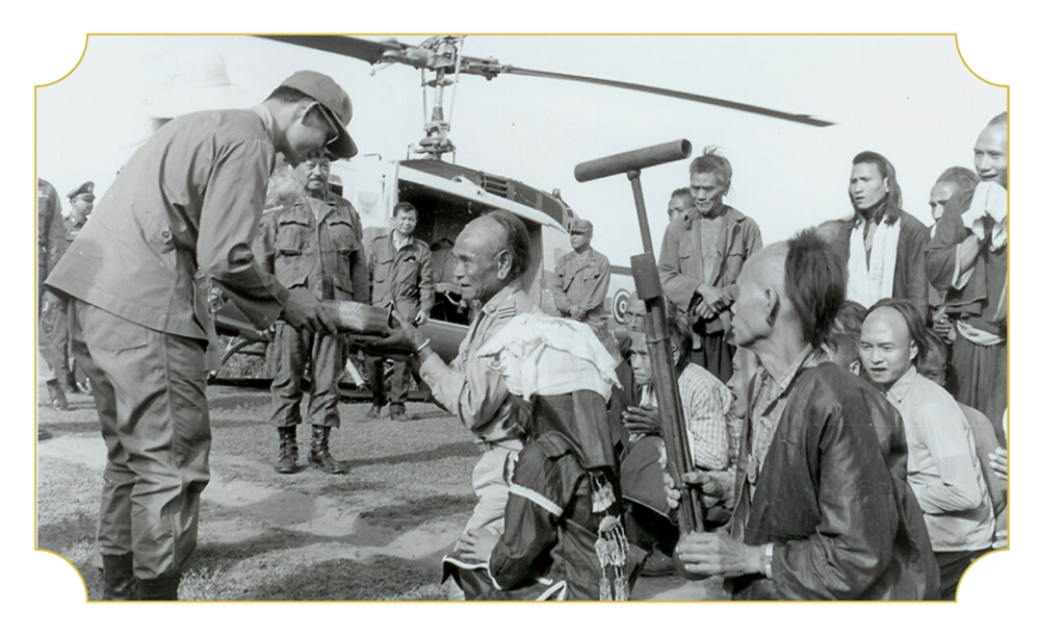
Thailand's Royal Project was initiated in 1969 by His Majesty King Bhumibol Adulyadej the Great following a visit to Doi Pui, a highland village in Chiang Mai Province. During the visit, His Majesty observed the challenges faced by highland communities, including poverty, limited livelihood opportunities, environmental degradation, and unsustainable land use practices.
Recognising that these challenges were closely interconnected, His Majesty envisioned a long-term development approach that would improve people's quality of life while restoring and conserving natural resources. This vision became the foundation of the Royal Project—an initiative that transformed highland development through research, innovation, and community participation.
Rather than focusing on a single issue, the Royal Project adopted an integrated approach that addressed agriculture, natural resource management, education, healthcare, infrastructure, marketing, and human development simultaneously. This holistic philosophy continues to guide sustainable highland development in Thailand today.
The Early Beginnings
The Royal Project officially began in 1969 with the objective of improving the livelihoods of highland communities through sustainable alternatives to traditional agricultural practices. His Majesty recognised that research would play a central role in identifying suitable crops, farming systems, and technologies that were adapted to the unique conditions of Thailand's highlands.
Scientists, universities, government agencies, and international organisations were invited to work together in developing practical solutions that responded directly to local needs. Research findings were tested with farming communities before being expanded to other areas, creating a development process based on scientific evidence and continuous learning.
This collaborative approach enabled highland communities to diversify agricultural production, increase household incomes, improve food security, and reduce pressure on forest and watershed ecosystems.
The Royal Project Model
Over more than five decades, the Royal Project has evolved into an internationally recognised development approach known as the Royal Project Model.
The model integrates scientific research, technological innovation, community participation, and environmental stewardship to achieve balanced and sustainable development. It demonstrates that improving livelihoods and conserving natural resources are mutually reinforcing goals.
The Royal Project Model is founded on the following principles:
- People-centred development that improves quality of life
- Research and innovation as the foundation for development
- Sustainable and market-oriented agriculture
- Conservation of forests, watersheds, and biodiversity
- Community participation and local ownership
- Integrated development across social, economic, and environmental dimensions
- Long-term sustainability and self-reliance
Although the Royal Project predates the adoption of the United Nations Guiding Principles on Alternative Development (UNGPAD), many of its core principles are closely aligned with the international framework. These include people-centred development, community participation, environmental sustainability, good governance, and the promotion of sustainable livelihoods. This alignment highlights the Royal Project Model as an enduring example of integrated development that remains relevant to contemporary global development practice.
Today, the Royal Project Model is recognised as one of Thailand's leading examples of sustainable highland development. Through the Highland Research and Development Institute (Public Organization) (HRDI), the model continues to evolve in response to emerging challenges such as climate change, biodiversity conservation, food security, and inclusive rural development. HRDI applies the model through research, innovation, knowledge management, and partnerships, while sharing its experience through international cooperation and capacity-building initiatives.
Related Resources
- United Nations Guiding Principles on Alternative Development (2013)
- UNODC – Alternative Development
- UNODC Practical Guide on Alternative Development and the Environment (2023)
From the Royal Project to HRDI
Building upon the achievements and experience of the Royal Project, the Royal Thai Government established the Highland Research and Development Institute (Public Organization) (HRDI) in 2005.
HRDI was created to extend the principles and successful practices of the Royal Project beyond its original operational areas and to promote sustainable development across Thailand's highlands.
Today, HRDI integrates research, innovation, knowledge management, and community-based development to generate practical solutions for highland communities. Working closely with government agencies, academic institutions, local communities, development partners, and international organisations, HRDI continues to strengthen sustainable agriculture, conserve natural resources, improve livelihoods, and enhance resilience in response to emerging challenges such as climate change and changing socio-economic conditions.
International Recognition
The Royal Project has gained international recognition as an outstanding example of integrated rural development and sustainable mountain development.
Its achievements demonstrate how scientific research, innovation, community participation, and effective partnerships can successfully address complex development challenges while balancing economic growth with environmental conservation.
The experience and lessons learned from the Royal Project continue to contribute to international dialogue on sustainable development, alternative development, food security, climate resilience, and natural resource management.
His Majesty's Vision
"One of the reasons underlying the creation of the project was humanitarianism; the desire that these people living in remote areas should become self-supporting and more prosperous."
His Majesty King Bhumibol Adulyadej The Great
Royal Address at the Faculty of Agriculture, Chiang Mai University
10 January 1969
Timeline
| Year | Milestone |
|---|---|
| 1969 | His Majesty King Bhumibol Adulyadej the Great initiated the Royal Project following a visit to Doi Pui, Chiang Mai. |
| 1970s–1980s | In the 1970s and 1980s, the Royal Project progressively expanded research-based agricultural development, community participation, and environmental conservation across highland areas. |
| 1990s | The Royal Project became internationally recognised for its integrated approach to sustainable mountain development and alternative development. |
| 2005 | The Highland Research and Development Institute (Public Organization) (HRDI) was established to extend the Royal Project Model beyond the original Royal Project areas. |
| Today | HRDI continues to advance the Royal Project Model through research, innovation, knowledge management, and partnerships to promote sustainable highland development throughout Thailand. |
Related Links
- Royal Project Foundation
- About HRDI
- HRDI History
- Mission and Vision
- Our Partnerships